





Elements of structure in buildings
Approved document B, Fire Safety, Volume 2, Buildings other than dwellinghouses (2019 edition), suggests an ‘element of structure’ is any of the following:
- A member that forms part of the structural frame of a building, or any other beam or column.
- A loadbearing wall or loadbearing part of a wall.
- A floor.
- A gallery (but not a loading gallery, fly gallery, stage grid, lighting bridge, or any gallery provided for similar purposes or for maintenance and repair).
- An external wall.
- A compartment wall (including a wall that is common to two or more buildings).
The guidance to requirement B3, paragraph 6.2, lists structures that are not considered to be elements of structure:
- The roof performs the function of a floor, such as for parking vehicles, or as a means of escape.
- The structure is essential for the stability of an external wall that needs to be fire resisting (e.g. to achieve compartmentation or for the purposes of preventing fire spread between buildings).
- The lowest floor of the building.
- A platform floor.
- External walls, such as curtain walls or other forms of cladding, which transmit only self weight and wind loads and do not transmit floor load.
NOTE: In some cases, structural members within a roof may be essential for the structural stability system of the building. In these cases, the structural members in the roof do not just support a roof and must demonstrate the relevant fire resistance for the building as required by the note to paragraph 6.1 (If one element of structure supports or stabilises another, as a minimum the supporting element should have the same fire resistance as the other element).
[edit] Related articles on Designing Buildings Wiki
- Adaptive structures.
- Approved Document A.
- BRE Building Elements series (AP 243).
- Compression.
- Dead loads.
- Deflection.
- Detailed structural design.
- Dry riser.
- Elastic limit.
- Escape route.
- Fire and rescue service.
- Fire compartment.
- Fire damper.
- Fire detection and alarm systems.
- Fire door.
- Firefighting route.
- Fire protection engineering.
- Fire resistance.
- Joint fire code.
- Lean to.
- Live loads.
- Means of escape.
- Multi-storey structure.
- Protected escape route.
- Span.
- Stiffness.
- Structural principles.
- Structural vibration.
- Types of column.
- Types of structural load.
- Types of structure.
- Unprotected escape route.
- Wet riser.
Featured articles
Check out some of the best features and news from Designing Buildings as well as key stories from around the web.
Connecting knowledge, technology and conservation
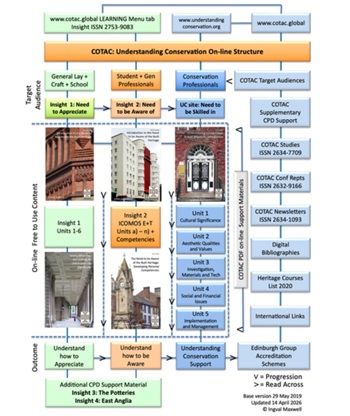
Building competence for the future of built heritage.
Building Regulations and Building Safety Act
CIOB publishes free advice for non-domestic clients.
Building Safety Newsletter from MHCLG.
An extraordinary record of steel engineering worldwide.
Households living near new pylons to save on bills.

ECA warns growth must not outpace grid capacity or skills.
The role of the client and decision making

CIOB response to built environment professions call for evidence.
Construction's sustainability reporting revolution
Tracking upfront embodied carbon with digital tools.
ECA welcomes procurement reforms

Public spending must back British jobs and skills.
Campaigning for Edinburgh: the Cockburn Association 1875-2049

The role of the civic voice in protecting character. Book review.
CIOB photography competition is open for entries.
ECA Edmundson apprentice of the year award

Finalists announced.